








The excavation of a 6,500-year-old site in Bulgaria has stunned archaeologists, uncovering what is considered to be the world’s oldest processed gold. Excavated in the Varna Chalcolithic Necropolis along the coast of the Black Sea, this ancient site provides a glimpse into one of the earliest advanced civilisations in Europe. Among the many tombs, one in particular has caught their eye, replete with as much gold as one could possibly imagine. This incredible discovery is not simply about gold and riches; it is about rewriting history and understanding the early civilisations’ attitudes toward wealth and social structure.
Varna Necropolis : Home to the world’s oldest gold
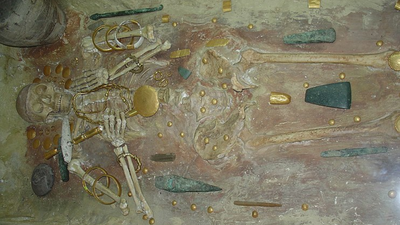
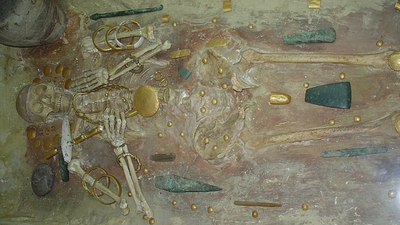
According to Varna’s official website, Varna Necropolis, found by accident in 1972, has been identified as one of the most important prehistoric archaeological sites in the world. Belonging to the period between 4600 and 4200 BC, it has the oldest known processed gold in the world.So far, archaeologists have found almost 300 tombs in the necropolis, containing complex objects made of gold, copper, and other materials. In total, there are over 3,000 gold objects, weighing over 6 kilograms, not only the oldest but also one of the richest prehistoric gold collections in the world.These discoveries have confirmed that Bulgaria is the cradle of early human metallurgy, contrary to the commonly accepted idea that the cradle of metallurgy lay in Mesopotamia or Egypt.
The ‘Golden Man’: A grave of power and prestige
One of the most notable grave sites is one that is often referred to as the “leader’s grave.” This grave was notable for containing over 1.5 kilograms of gold ornaments, such as jewellery, and other symbolic materials.The person in this grave was likely a chief or a prominent figure in society, and this grave was likely a symbol of their status in life. It is clear that this social hierarchy existed much further back in time than was previously known.Research out of “New Perspectives on the Varna Cemetery (Bulgaria)” found that there was a limited number of such lavish grave sites, suggesting “a stabilisation of the new social structure” in the Copper Age, which is a time period in which a social class system was likely established, with great wealth and power concentrated in a few hands.
What the oldest gold relics reveal about early civilisation
The Varna gold artefacts are not simply for decoration but have significant cultural and symbolic implications. Archaeologists have indicated that the gold artefacts were not simply for show but have ritual or spiritual significance. Renowned Archaeologist Sir Colin Renfrew, in a conversation with the European Journal of Archaeology, observed that the discovery of gold artefacts in Varna was unexpected. He observed that the “oldest gold treasure… was not found in Sumer or Egypt,” refuting earlier views of the origins of civilisation. The level of craftsmanship in the gold artefacts also indicates that the people of Varna were already skilled in the metallurgy of gold, much earlier than previously thought.
A discovery that redefined human history
The Varna Necropolis continues to change our perspective on prehistoric Europe. This site proves that complex societies, social hierarchies, economic networks, and symbolic use of wealth date back much earlier than we thought.Today, even 70% of the site remains to be excavated, which gives us hope for more discoveries in the future, which may change our perspective on human development even more. In a sense, this 6,500-year-old grave site is not just a grave site but a message from the past, saying that our past is not just deep but shines much brighter than we thought.