









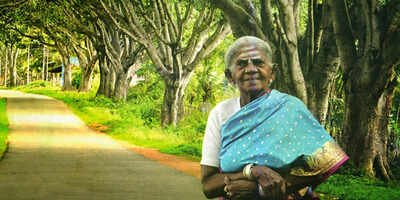
On a dusty stretch of highway in Karnataka, the surprise is not the traffic but the shade. Banyan after banyan rises on the roadside like a green procession, turning an ordinary route between Hulikal and Kudur into something closer to a living memorial. The story behind it belongs to Saalumarada Thimmakka, a woman whose name has become inseparable from one of India’s most remarkable acts of patient, homegrown environmental care. Scroll down to read more.
A life that began in hardship
Thimmakka’s early life was anything but easy. Reporting on her consistently describes her as a poor, uneducated labourer from rural Karnataka who lived through physical work and financial strain. She and her husband, Chikkaiah, made a modest living and, as several profiles note, the couple remained childless. That sorrow became the strange, tender engine of her life’s work. Instead of sinking into loss, the pair turned to the land around them and began to treat trees as the children they did not have.
Planting as an act of devotion
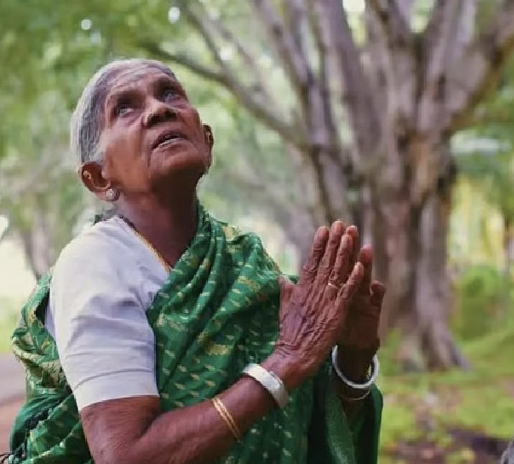
What followed was not a symbolic gesture but a long, punishing routine. Thimmakka and her husband gathered banyan saplings, planted them along the roadside, and tended them through years of heat and uncertainty. Accounts say they carried water for miles, often from about four kilometres away, just to keep the young trees alive. They also protected the saplings from grazing cattle with thorny fencing. In other words, the forest did not grow by miracle; it grew because someone kept returning to it, day after day, with water, labour and faith.
The road became her legacy
She planted and nurtured 384 banyan trees along a stretch of highway between Hulikal and Kudur in Karnataka, gradually transforming what was once a barren roadside into a living corridor of shade. Some reports describe the stretch as about four kilometres, while others round the distance slightly differently, but the essence of the story remains unchanged.She did not plant a decorative avenue. She created shade where shade mattered. Over time, the long row of banyan trees turned an ordinary road into a landmark that people began travelling to see, a quiet testament to patience, care and years of steady effort.
A name that fit the landscape
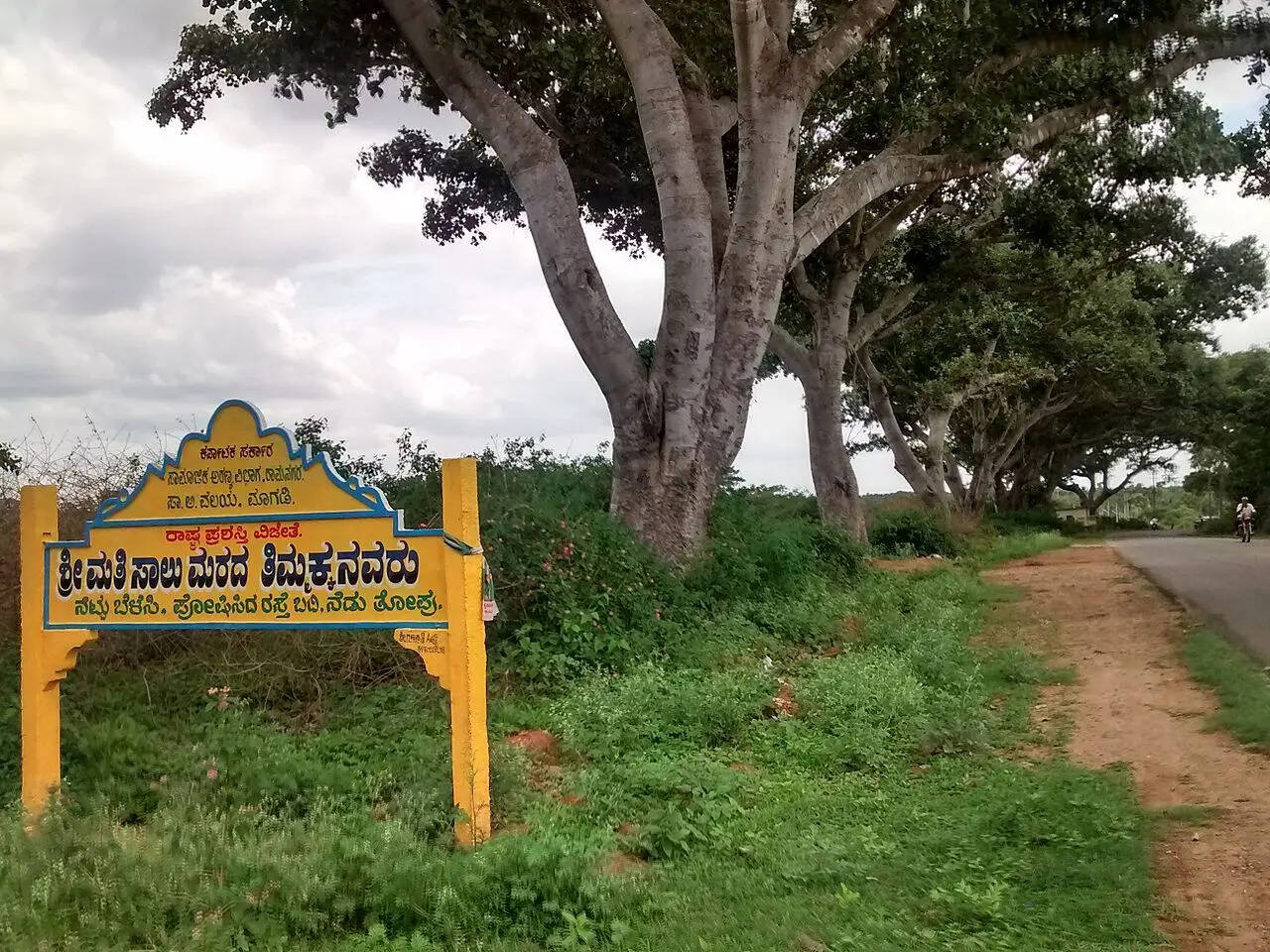
Her title, Saalumarada, is Kannada for “row of trees,” and it is one of those rare names that feels earned in the most literal way. The title came to stand for more than botany. It pointed to endurance, to a kind of motherhood that was not biological but deeply protective. Thimmakka’s work became a quiet rebuttal to the idea that one needs wealth, education or position to shape public life. She had none of those in any grand sense. What she had was time, grit and a stubborn refusal to let the roadside remain empty.
From local labour to national respect
For years, the work remained rooted in the everyday reality of village life. But over time, Thimmakka’s story moved far beyond Karnataka. Profiles and later reports show how she came to be celebrated as an environmental icon, a woman whose influence reached national recognition, including the Padma Shri awarded to her in 2019. The achievement was not simply that she planted trees. It was that she turned conservation into a human story the country could understand: grief redirected into stewardship, labour transformed into legacy, and a private life of scarcity made public through shade.
Why her story still lands
Thimmakka’s life has that unusual quality that makes people stop scrolling and start thinking. It is simple enough to be remembered and large enough to be admired. A poor labourer. A childless couple. A highway. A handful of saplings. Then, over decades, a line of banyans that outlived the hard years that produced them. In a culture that often praises spectacle, her story argues for a slower kind of greatness, one built with calloused hands, repeated effort and a refusal to believe that small acts stay small forever.