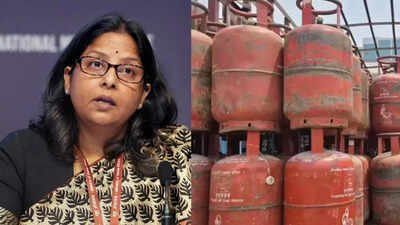











Centre stepped up its bid to expand gas networks in the country and reduce dependence on a single fuel source, rolling out a new policy that will halt supplying LPG to households that do not shift to piped natural gas (PNG) in areas where such infrastructure is already available. The move comes at a time when global oil supplies have been disrupted by the ongoing Middle East crisis. As the crisis continues, authorities are promoting PNG as an alternative for both households and commercial users, highlighting its continuous supply through pipelines that removes the need for repeated cylinder refills. The directive has been issued through the Natural Gas and Petroleum Products Distribution (Through Laying, Building, Operation and Expansion of Pipelines and Other Facilities) Order, 2026, notified by the ministry of petroleum and natural gas.Explaining the intent behind the reform, oil secretary Neeraj Mittal stated in a post on X that “a crisis (has been) turned into an opportunity”, referring to the reforms linked to ease of doing business. The order, issued under the Essential Commodities Act, also lays emphasis on speeding up approvals related to pipeline projects. It introduces time-bound clearances, standardised charges, and simplified procedures to ensure faster execution of infrastructure projects.
Here’s what the order said:
Switching from LPG to PNG: The order focused on accelerating pipeline infrastructure, streamlining approval processes, and encouraging a transition from LPG to PNG in the country to enhance energy security. The policy also aims to optimise the distribution of LPG by reallocating supplies from regions that already have pipeline access to those that do not, while supporting “fuel diversification” amid ongoing global disruptions, including damage to liquefaction facilities in the Gulf and restrictions around the Strait of Hormuz.LPG supply cease: Under the provisions of the order, households located in areas where PNG connectivity is available will be required to make the switch. The order specifies that households notified by authorised entities must apply for and obtain PNG connections where pipelines have been laid. It notes, “The LPG supply to such an address shall cease after three months from the date of the communication.”New rules for authorities: Public authorities are required to grant permissions or right of way within specified timelines, failing which approvals will be treated as automatically granted. Additionally, the order prohibits authorities from levying charges beyond those prescribed under the framework. In residential clusters, entities responsible for managing access must provide permissions within three working days, while last-mile PNG connections are expected to be completed within 48 hours. Applications for pipeline connectivity in such areas are not to be rejected. To resolve disputes related to land access and permissions, the order empowers designated officers with authority similar to that of a civil court to grant right of way where required. New rules for operators: Pipeline operators are also bound by timelines, with a requirement to begin laying pipelines within four months of receiving approval. Failure to comply may attract penalties, including the possibility of losing exclusivity rights. Oversight of the entire implementation has been assigned to the Petroleum and Natural Gas Regulatory Board (PNGRB), which will track approvals, rejections, and compliance across entities involved.Exceptions: At the same time, the order provides flexibility in cases where providing a piped connection is “technically infeasible”, in which case a no-objection certificate (NOC) can allow continued LPG supply. “The supply of LPG to a household shall not cease, if the authorised entity issues a no-objection certificate (NOC) on the ground that it is technically infeasible to provide a piped natural gas connection or gas supply to such household,” the order stated. Authorised entities are required to maintain detailed records explaining the reasons for such infeasibility and must withdraw the NOC once they are able to operationalise piped gas supply to those households.