









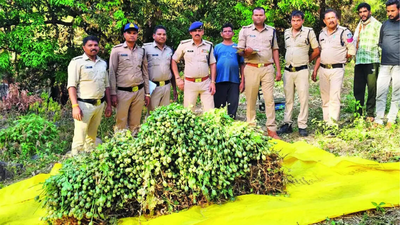
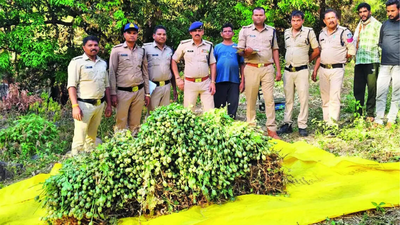
BHOPAL: Revenge was not the reason for killing the rewilded, radio-collared tiger in the forests of Chhindwara district in Madhya Pradesh. The killers of the big cat were illegal opium cultivators who wanted to keep forest patrol teams and officials away from their illegal farming activities.Increased presence of the forest team that tracked the tiger movement through its radio-collar was proving to be a cause of concern for the accused, said investigators.The tiger, around four-and-a-half years old, was released into the wild in Dec 2024 after it was moved from Bandhavgarh Tiger Reserve to Satpura Tiger Reserve. It was fitted with a satellite collar with a programmed drop-off mechanism on Jan 1, 2025 to enable continuous monitoring without recapture.Forest officials tracking the tiger through the radio-collar were alarmed when it stopped sending signals on Mar 3 and sent patrol teams that found the carcass of a bull. On an intensive search the team came across the tiger carcass at some distance. It was initially said that an angry villager had killed the tiger after the animal preyed upon his bull. He had poisoned the bull as bait for the tiger, which died after consuming it.Investigators found that the carcass of the bull used to poison the tiger had both its ears severed, to prevent identification of the owner through ear tags. Officials said the tiger’s satellite collar, valued at over Rs 6 lakh, was also burned to destroy tracking data and eliminate evidence of its last movements.The tiger’s body was then buried in a pit nearly 200 metres away from the site. They found 6,148 opium plants, weighing 194.5 kg, from the accused’s farm inside the forest. Police have registered a case under Sections 8, 18(c) and 25 of the NDPS Act. Officials handling the system reportedly believed the blackout could be linked to satellite interference amid the ongoing Iran–Israel conflict, delaying an immediate ground response. A drop-off command was issued only on Mar 19 and when a local team went to recover the collar in Chhatiaam area in Sangakheda range, it found the tiger’s carcass buried in the ground and an active opium cultivation site in the same forest stretch.The trail led to Udesingh, 50, a resident of Chhatiaam village. He admitted to lacing the carcass with pesticide after the tiger killed his livestock. Investigators said the motive extended beyond retaliation because the tiger’s repeated movement brought forest patrols close to a concealed opium plantation, creating pressure on those running the illegal operation.Three more accused, Bisanlal Sheelu, Manohar Singh and Kailal, were arrested. Chhindwara SP Ajay Pandey said. The probe was examining links to a larger narcotics cartel.Wildlife activist Ajay Dubey flagged concerns over failures in the radio-collar monitoring system and sought a forensic audit of the tracking mechanism, questioning how a collared tiger could go silent without triggering an immediate field response.