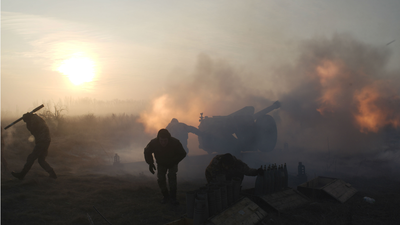









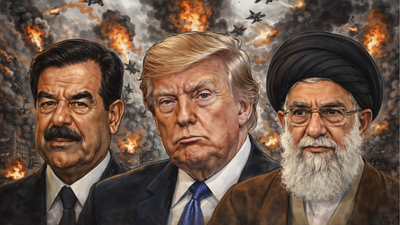
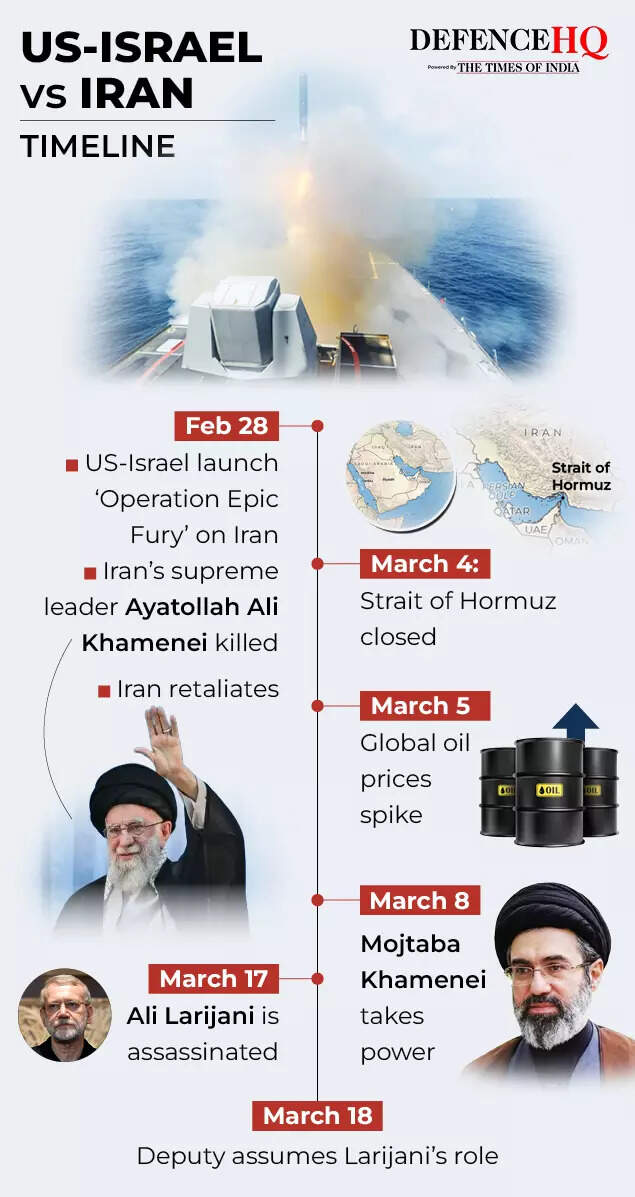
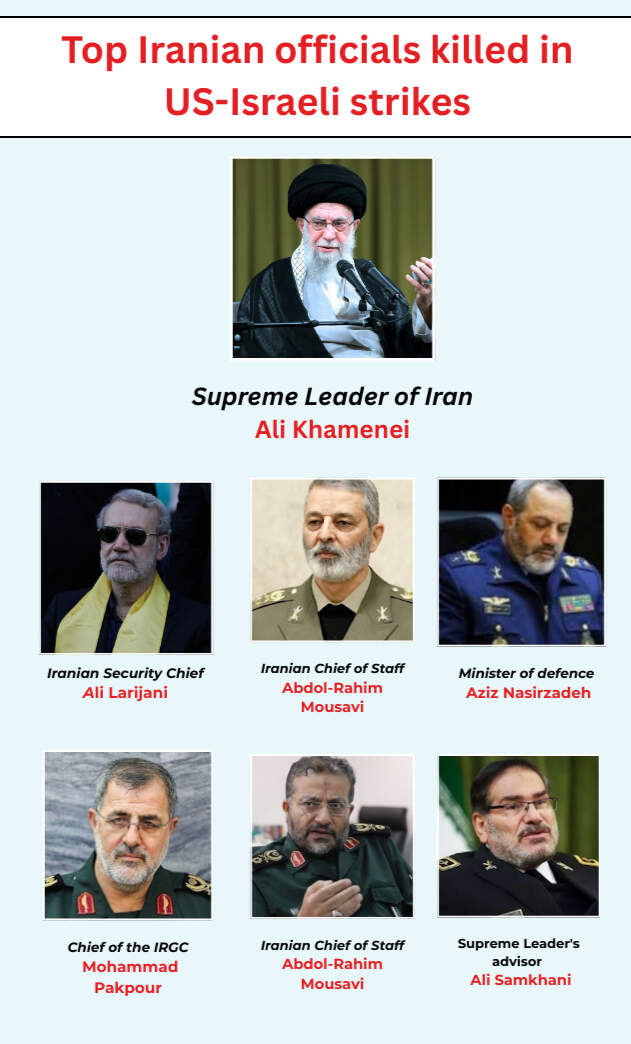
In April 2003, when US forces toppled the statue of Saddam Hussein in Firdos Square, the Iraqi military vanished almost overnight. Saddam’s regime was a classic “top-down” pyramid, once the apex was removed, the base had no instructions and no authority to act. The regime collapsed.In 2026, the world is witnessing the opposite.Despite the confirmed assassinations of Iran’s top leadership, including Supreme Leader Ali Khamenei, national security chief Ali Larijani, and senior commander Qassem Soleimani, the Islamic Republic has not folded.
Instead, it continues to retaliate, expand the battlefield, and sustain pressure across the region.The reason lies in a doctrine Tehran spent two decades perfecting: Mosaic Defence.
Losses yes, vacuum no
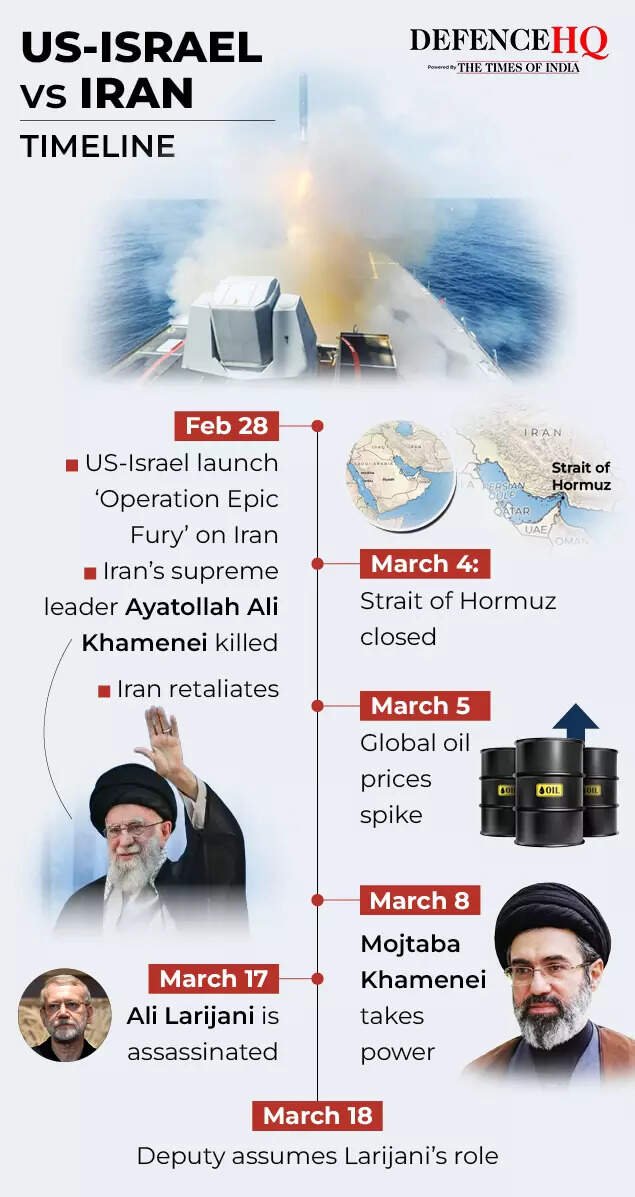
Israel’s strategy in the opening weeks of the 2026 conflict focused heavily on “decapitation strikes”, targeting Iran’s top leadership and military command structure. The assassination of Ali Larijani on March 17 was intended to be the final blow. Larijani had emerged as the “manager of the chaos” after Ayatollah Khamenei was killed in a massive airstrike on the first day of the war.“It will not happen all at once, and it will not happen easily. But if we persist, we will give them the chance to take their destiny into their own hands,” Israeli Prime Minister Benjamin Netanyahu stated following the Larijani strike. Israeli defence minister Yoav Gallant echoed this, terming Larijani’s death the “elimination of the de-facto leader.”
The Iranian Supreme National Security Council confirmed the deaths while simultaneously announcing that the “system remains.”“I do not know why the Americans and the Israelis still have not understood this point: The Islamic Republic of Iran has a strong political structure with established political, economic, and social institutions,” Iranian foreign minister Abbas Araghchi said. The foreign minister affirmed that the “presence or absence of a single individual does not affect this structure.”Under a rigid “successor ladder” protocol, Larijani’s deputy assumed full operational powers within hours. The bureaucracy of war did not pause, it simply shifted to the next rung.
The Mosaic defence explained
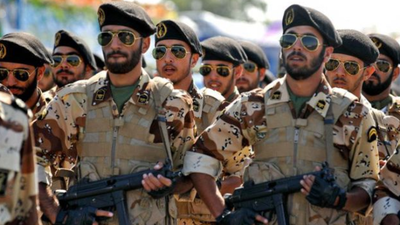
This resilience is not accidental. It is the result of the Mosaic Defence.The Mosaic Defence is not just a strategy used on the battlefield; it is a systemic redesign of how a state prepares for war when under existential threat. Developed in the mid-2000s under IRGC commander General Mohammad Ali Jafari, the doctrine restructures Iran’s military and security apparatus into a decentralised network of semi-autonomous units designed to operate even in the absence of central leadership.The core premise: If the enemy cuts off the head, the body must be able to think, fight, and survive on its own.To achieve this, the IRGC restructured itself into 31 independent provincial commands. In this model, each of Iran’s provinces functions as a “tile” in a larger mosaic. If Tehran “goes dark” due to a decapitation strike or the destruction of central communications, the provincial commander is pre-authorised to become a local “Supreme Leader.”They do not wait for orders from a central bunker. They have standing authority to activate local missile batteries and launch independent retaliatory strikes.Each province maintains independent stockpiles of fuel, food, and medicine, preventing a “siege of the capital” from starving the rest of the country.According to reports, millions of neighbourhood-level paramilitary volunteers are embedded at the grassroots, ready for “cell-based” urban warfare without needing a signal from a central headquarters.Even if satellite links are jammed or command bunkers destroyed, pre-set war plans continue to function independently, rather than waiting for fresh instructions.
‘Headless Hydra’ effect
By decentralising command, Iran has effectively neutralised the very concept of a “decapitation strike.” In a traditional war, killing the central leadership ends the conflict. In a Mosaic war, killing the leaders merely “unleashes” the tiles.The battlefield has become so fragmented that even unintended or unsynchronised strikes continue. CENTCOM officials have acknowledged that many of the recent drone swarms in the Strait of Hormuz were likely carried out by provincial units acting entirely on their own—a direct outcome of this cellular structure.Under this system, killing one commander does not create a vacuum, it activates a succession chain. Destroying a command node does not halt operations, it only shifts the responsibility to other nodes.The system does not break down, it adapts. The war, in effect, continues without needing a central command to drive it, making it significantly harder to end.
Low-cost trap
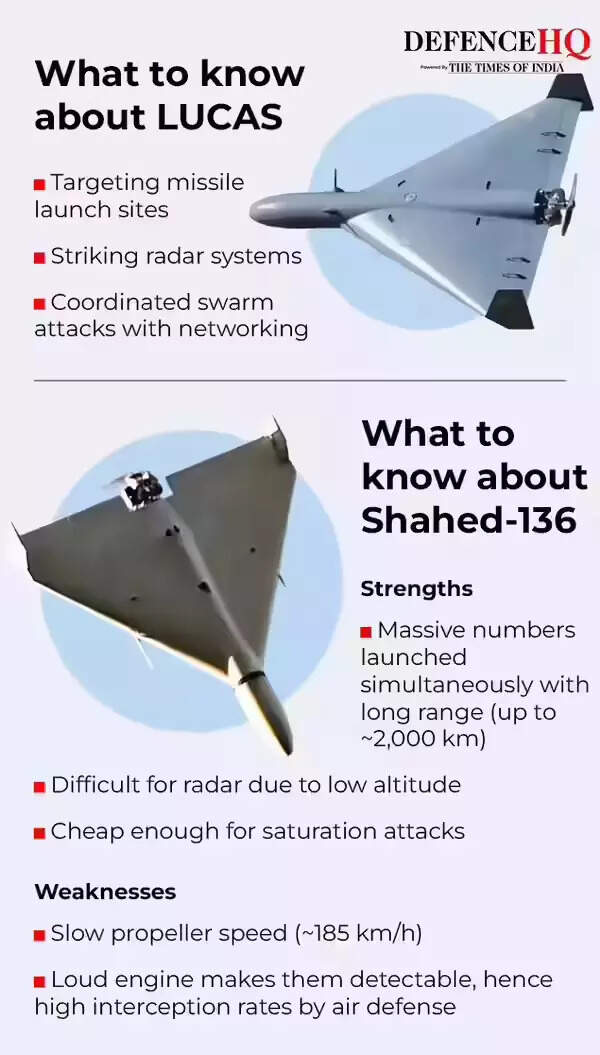
Iran may not win a conventional war. But it can prolong the conflict, expand the battlefield, and raise costs globally.Using low-cost weapons, such as Shahed drones costing between $20,000 and $50,000, Iran is forcing its opponents to spend millions on interceptors like the THAAD and Patriot missile system. When this is multiplied across 31 autonomous provinces, the financial drain on the coalition becomes a primary weapon.
The doctrine also relies on Iran-backed groups, collectively known as the “Axis of Resistance,” to widen the battlefield. Velayati, a senior advisor to the Supreme Leader, said Hezbollah remains strong: “Hezbollah is stronger than ever,” despite claims it had weakened.These external “tiles” function much like the internal ones, operating with high degrees of autonomy and ensuring that even if communication with the centre is lost, the periphery continues to strike.By creating 31 different “heads,” Iran creates a data overload for Western intelligence.Instead of tracking one “Supreme leader”, the US and Israel are now forced to track 31 different commanders, each with their own local agendas and retaliatory thresholds. This makes it difficult for the West to predict Iran’s next making the response planning difficult.
Lessons from Iraq
The lesson from 2003 was that a pyramid is easy to topple. The lesson of 2026 is that a mosaic is nearly impossible to shatter.The intellectual roots of Mosaic Defence lie in Iran’s analysis of US military campaigns in Iraq and Afghanistan.
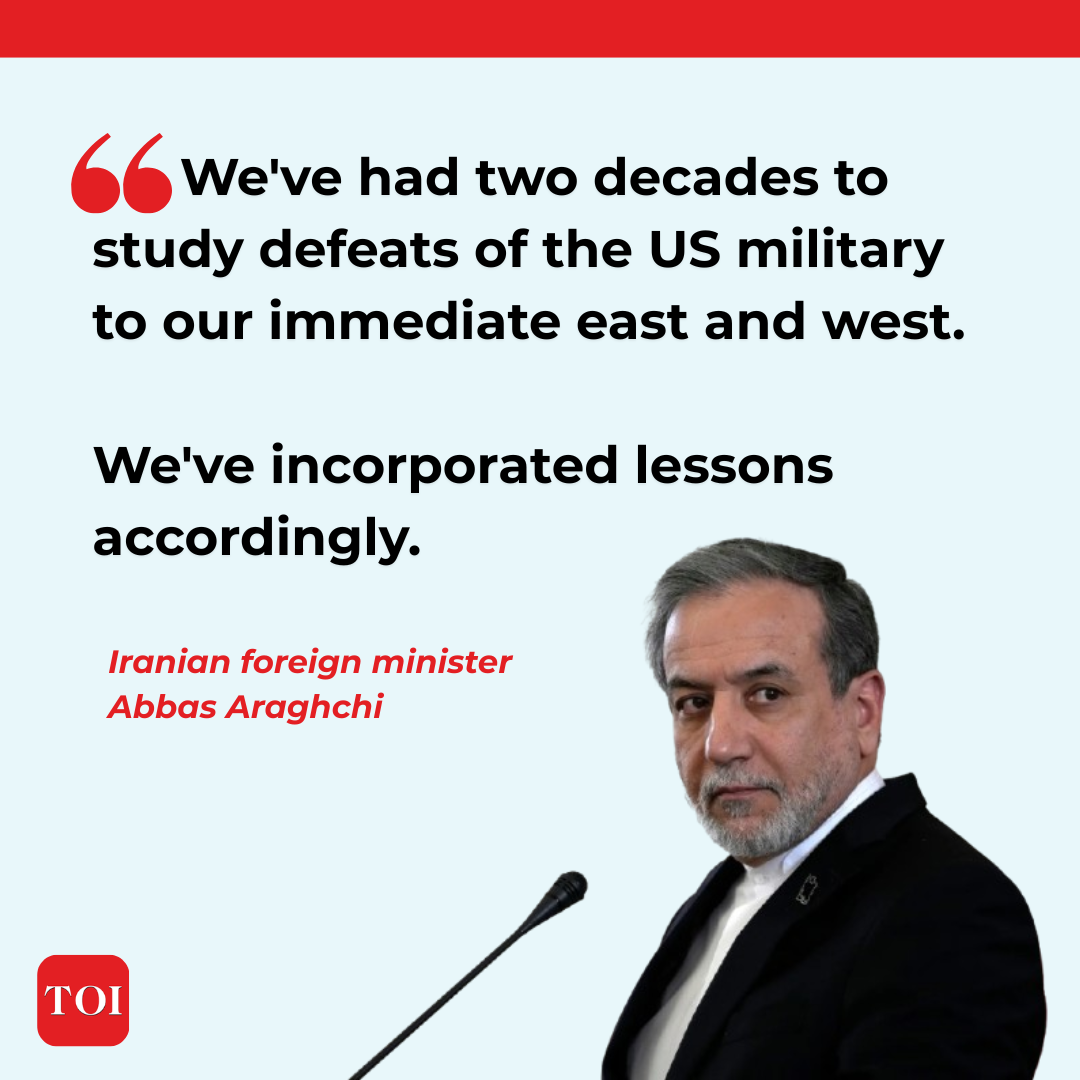
The contrast is stark.In Iraq, once the leadership fell, soldiers abandoned posts, command chains snapped, and resistance dissolved within days.In Iran’s model, the fall of leadership does not mean end of the system. It is a scenario already accounted for in its design.Instead of concentrating power, Iran dispersed it. Instead of protecting leadership at all costs, it prepared for its loss. Instead of building a system that depends on control, it built one that survives without it.As Iranian foreign minister Abbas Araghchi noted, “We’ve had two decades to study defeats of the US military to our immediate east and west. We’ve incorporated lessons accordingly.Bombings in our capital have no impact on our ability to conduct war. Decentralized Mosaic Defence enables us to decide when—and how—war will end.”
Is there an “off-switch”?
The West is playing a game where taking out one piece ends the match. Iran has turned it into a system where every piece can keep playing on its own.The most unsettling aspect of the Mosaic Defence is that it may not have an “off-switch” which makes it difficult to comprehend how war will end.Because, in conventional wars, escalation is paired with control. Even at the height of fighting, there remains a chain of authority capable of negotiating, signalling restraint, or enforcing a ceasefire.Mosaic Defence disrupts that logic.With authority distributed across multiple nodes, there may be no single command that can fully authorise to end the conflict. Even if political leadership seeks de-escalation, enforcing that decision across autonomous units becomes a challenge.This makes the war difficult to end.In that sense, Iran’s strategy is not designed to win in the traditional sense.It is designed to deny defeat.And in 2026, that may be the clearest measure of Iran’s strategy and, for now, enough.